First in India: Fortis Manesar Uses ALPI Tube Technology in Complex Rectal Cancer Surgery

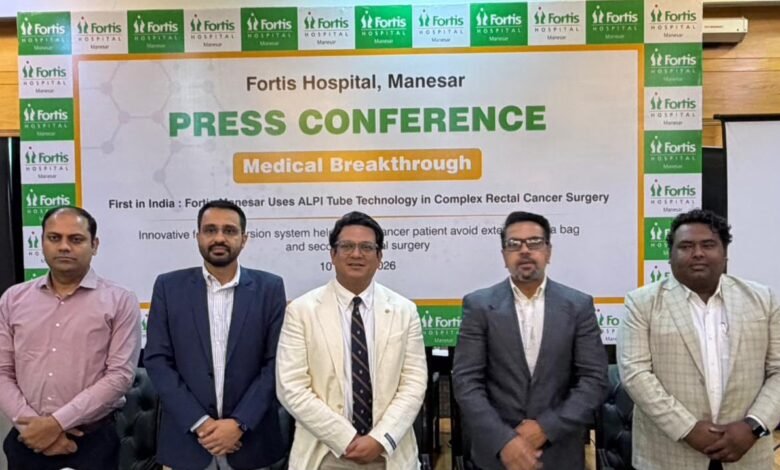
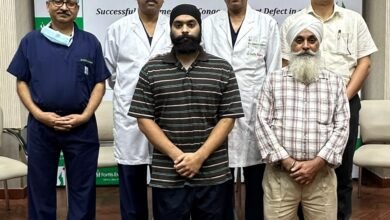
Fortis Hospital Manesar has become the first hospital in India to successfully use the innovative ALPI Tube Faecal Diversion System, improving the quality of life for the 55-year-old Bangladeshi Patient, suffering from stage 3 rectal cancer.The complex procedure was led by Dr. Vinay Samuel Gaikwad, Senior Director – Surgical Oncology, Fortis Hospital Manesar, who utilized the novel technique as part of a roboticassisted cancer surgery.
The patient, Mr. Moyazzem Hossain, had been suffering from persistent rectal pain for nearly five months. Due to lack of advanced treatment in his country, he travelled to India and consulted specialists at Fortis Manesar. Detailed investigations – including blood tests, tumour marker evaluation, and a PETCECT scan, revealed a large rectal tumour measuring approximately 13 cm with involvement of surrounding tissues, confirming Stage III colorectal cancer. After a detailed evaluation, the patient underwent a robotic-assisted surgery to remove the cancerous part of the rectum and nearby affected tissues. Traditionally, patients undergoing lower rectal cancer surgery often require a temporary stoma (an opening created in the abdomen to divert stool away from the healing surgical site) post the surgery. While effective in reducing the risk of anastomotic leaks (a surgical connection between two sections of the intestine which does not heal properly, causing intestinal contents to leak) stomas can significantly impact quality of life and often require an additional surgery for reversal.
Dr. Vinay Gaikwad and his team adopted an innovative approach by placing an ALPI Tube within the intestine during surgery. The device internally diverts faecal matter away from the newly created colorectal junction, protecting the surgical site during healing without the need for an external stoma bag. The technique not only eliminates the discomfort and lifestyle restrictions associated with a stoma but also avoids a second surgery for stoma closure. The surgery lasted about six hours and involved removing the tumour and affected tissues, followed by reconstruction of the intestine, and placement of the ALPI Tube. The patient recovered well after the procedure and was discharged in a stable condition within six days.
Dr. Vinay Samuel Gaikwad, Senior Director, Surgical Oncology, Fortis Hospital Manesar said, “For decades, temporary stomas have been considered the standard protective measure following low rectal cancer surgeries. While clinically effective, they often carry considerable psychological, social and physical burdens for patients. The ALPI Tube offers a promising alternative in carefully selected cases by providing internal faecal diversion while preserving patient comfort and dignity.
Dr. Vinay Samuel Gaikwad, Senior Director, Surgical Oncology, Fortis Hospital Manesar said, “For decades, temporary stomas have been considered the standard protective measure following low rectal cancer surgeries. While clinically effective, they often carry considerable psychological, social and physical burdens for patients. The ALPI Tube offers a promising alternative in carefully selected cases by providing internal faecal diversion while preserving patient comfort and dignity.