Fortis Gurugram Performs Delhi-NCR’s First Pivot-TR Device Implantation – Offering New Hope to Patients with Advanced Right Heart Failure

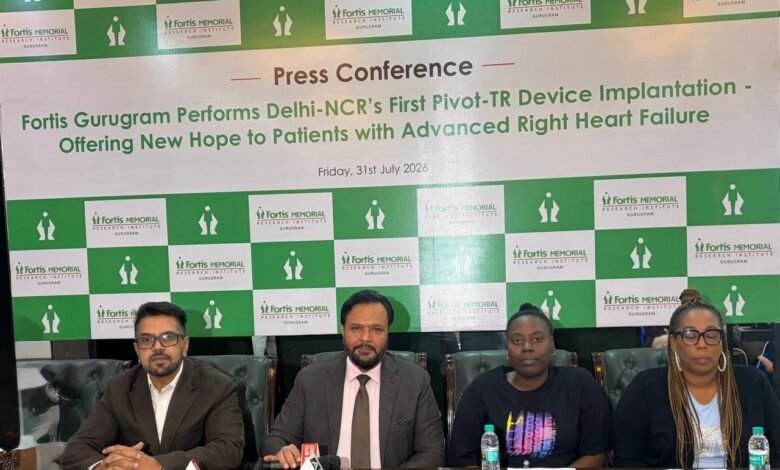
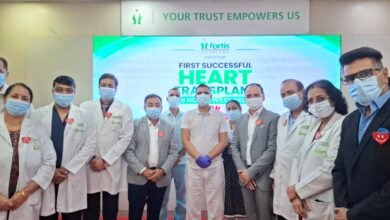
Fortis Memorial Research Institute (FMRI), Gurugram, has successfully implanted the Pivot Extend System – a permanent transcatheter implant designed to treat severe tricuspid regurgitation (TR), commonly known as a leaky heart valve in a 35-year-old woman from Trinidad and Tobago suffering from advanced heart failure. Tricuspid regurgitation (TR) is a condition in which one of the heart’s valves leaks severely, causing blood to flow backwards and making it difficult for the heart to pump efficiently. The procedure marks the Pivot Extend System implantation in an international patient in India, the first such implantation in Delhi/NCR, and only the third reported implantation of the device in India.
The patient Ms. Carveann Carleash David was admitted with severe breathlessness. Investigations revealed severe tricuspid valve leakage, significantly weakened heart function and a history of a specialised pacemaker implantation around eight to ten years ago. Earlier this year, she had also undergone a procedure to drain excess fluid around her heart.For nearly three years, she had experienced progressively worsening breathlessness, swelling in her legs and abdomen due to fluid build-up, and symptoms of advanced heart failure. The persistent valve leakage had led to congestion affecting her liver, abdomen and lower limbs. A heart transplant was considered as the only option for definitive treatment, but her clinical condition and cardiac anatomy made her unsuitable for conventional minimally invasive procedures available for Vascular Heart Disease. Following a comprehensive by a multidisciplinary cardiac team and discussions with the patient and her family, treatment with the Pivot Extend System was offered. Special permission was obtained from the Government of India to import the device after a detailed review of her medical condition.
Before the valve procedure, the patient underwent successful replacement of her pacemaker pulse generator on 22 July 2026. The Pivot Extend System was successfully implanted on 24 July 2026 without any procedural complications. The device works by placing a balloon spacer between the leaking valve leaflets, helping them close more effectively and reducing the backward flow of blood. While it is not a cure, the procedure is intended to relieve symptoms and improve quality of life for carefully selected patients with limited treatment options.
A follow-up echocardiogram on 25 July 2026 confirmed that the device had reduced the valve leakage from torrential to moderate. The patient continued to receive comprehensive medical therapy and supportive care during her hospital stay. Following clinical stabilisation, she was discharged in a stable condition on guideline-directed medical therapy with scheduled follow-up.
Dr. (Col.) Manjinder Singh Sandhu, Principal Director, Cardiology, Fortis Memorial Research Institute, Gurugram, said, “The patient was facing end-stage right-sided heart failure due to a severely leaking valve and adangerously weak heart. While a heart transplant was the ultimate cure, standard minimally invasive procedures weren’t an option because of her heart’s unique structure. With no traditional treatments left, doctors received special permission to implant an experimental device called the Pivot Extend System. The procedure went smoothly with no complications, immediately cutting down the valve’s leak. While not a permanent cure, the new device offers a vital lifeline for critically ill patients with few other choices.”
Mr Yash Rawat, Senior Vice President & Facility Director, Fortis Memorial Research Institute, Gurugram said, “At Fortis, we remain committed to expanding access to advanced and evidence-based therapies for patients with complex medical conditions. Successfully performing the first Pivot Extend System implantation in an international patient in India, and the first such procedure in Delhi NCR, reflects the strength of our multidisciplinary clinical expertise and our continued focus on bringing innovative treatment options to patients when conventional approaches are no longer feasible.