Apollo Hospital Marks over 200 Sickle Cell Transplants on World Sickle Cell Day

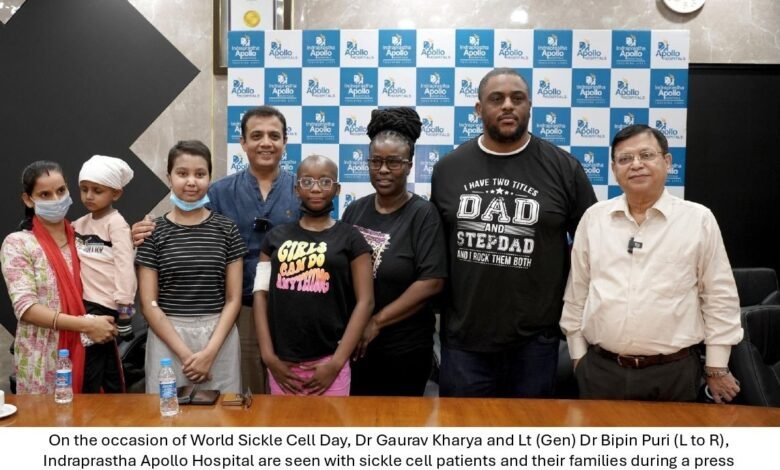
On World Sickle Cell Day, Indraprastha Apollo Hospitals, New Delhi, highlighted the urgent need for stronger prevention, early diagnosis and timely access to specialised care for Sickle Cell Disease (SCD), one of the most common inherited blood disorders in India.
Dr. Gaurav Kharya, Clinical Lead, Centre for Bone Marrow Transplant & Cellular Therapy, Senior Consultant, Paediatric Haematology, Oncology and Immunology, Indraprastha Apollo Hospital, has now successfully performed more than 215 bone marrow transplants for patients with Sickle Cell Disease, representing one of the largest single-centre experiences globally in the curative treatment of the disorder.Sickle Cell Disease is a genetic condition that affects the structure and function of red blood cells, leading to severe anaemia, recurrent pain crises, infections, organ damage, stroke and reduced life expectancy. The disease disproportionately affects populations across central, western and tribal regions of India, including states such as Madhya Pradesh, Maharashtra, Chhattisgarh, Gujarat, Odisha and Rajasthan.According to global estimates, nearly 300,000–400,000 children are born with Sickle Cell Disease every year worldwide, with India accounting for approximately 10–13% of annual global sickle cell births.
The importance of timely diagnosis and access to specialised treatment is reflected in the outcomes achieved for patients at Indraprastha Apollo Hospital. One such example is five-year-old Bhavya, who was diagnosed with severe Sickle Cell Disease in infancy and experienced frequent painful episodes, regular hospital visits and dependence on blood transfusions from an early age. Given the severity of his condition, he underwent a successful haplo-identical stem cell transplant under the care of Dr. Gaurav Kharya and his multidisciplinary team, with his sister serving as a partially matched donor. Following the procedure, Bhavya recovered well without major complications, offering him the possibility of a healthier, transfusion-free future.
Equally encouraging is the case of a 23-year-old woman who had been living with Sickle Cell Disease since the age of 10 and had experienced recurrent episodes of severe pain caused by blockage of blood flow in small blood vessels along with episodes of acute chest syndrome. Despite the challenges associated with long-standing disease, she successfully underwent a matched sibling donor stem cell transplant and recovered well without major complications.
Dr. Gaurav Kharya, Clinical Lead, Centre for Bone Marrow Transplant & Cellular Therapy, Senior Consultant, Paediatric Haematology, Oncology and Immunology, Indraprastha Apollo Hospitals, said, “India continues to carry a significant burden of Sickle Cell Disease and other inherited blood disorders, affecting thousands of families every year. While advances in transplant techniques and supportive care have made cure possible for a growing number of patients, prevention remains equally important. Strengthening newborn screening, carrier detection, genetic counselling and timely referral to specialised centres can help reduce complications, improve outcomes and move us closer to reducing the long-term burden of these disorders”
Dr. Kharya and his multidisciplinary team have treated patients not only from across India but also from several countries in Africa, the Middle East and Asian regions that continue to carry a high burden of Sickle Cell Disease.
India’s National Sickle Cell Anaemia Elimination Mission 2047 has brought renewed focus to a disease that remained under-recognised for many years despite affecting large populations across tribal and underserved communities. Healthcare experts believe that strengthening newborn screening programmes, expanding access to genetic counselling and increasing the availability of specialised treatment centres will be critical to achieving the country’s elimination goals. As research advances and treatment options continue to evolve, experts emphasise that the combination of prevention, early diagnosis and timely intervention offers the most effective pathway towards reducing the burden of Sickle Cell Disease in India and improving the lives of thousands of affected children and families.